

Navigating the complexities of workers’ compensation can be overwhelming, especially as technology continues to evolve at a rapid pace. The claims process, once burdened by paperwork, delays, and inefficiencies, is undergoing a transformation driven by digital innovation. From artificial intelligence streamlining claim evaluations to blockchain securing sensitive data, these advancements are redefining how injured workers receive compensation and how cases are managed.
For individuals who suffer workplace injuries, the ability to file and process claims efficiently is critical. A system that once relied on manual paperwork and prolonged disputes is now shifting toward automation, accuracy, and real-time data integration. Employers, insurers, and injured workers alike are benefiting from these innovations, which are improving workplace safety, expediting medical care, and reducing fraudulent claims.
Understanding these technological changes is essential for those seeking workers’ compensation benefits. Staying informed about these advancements ensures that injured workers can take advantage of a more streamlined claims process while securing the compensation they rightfully deserve. In this article, we explore how cutting-edge technology is reshaping workers’ compensation and what it means for claims management.
The Role of Digital Transformation in Claims Processing

The shift to digital claims processing is eliminating paperwork and improving efficiency across the board. Traditional claims processing often involved stacks of paperwork, repeated submissions, and lengthy wait times for approvals. With the rise of digital platforms, this outdated system is being replaced by streamlined workflows that make data entry, processing, and retrieval faster and more accurate.
One of the most significant advantages of digital transformation is the ability to automate tedious tasks. Automated claims management systems can instantly verify claim details, cross-check documents, and flag inconsistencies, reducing the likelihood of human error. This results in fewer claim rejections due to missing or inaccurate information, leading to quicker resolutions and faster compensation for injured workers.
Cloud computing is another key component of digital transformation. Secure cloud-based systems allow authorized parties to access and update claim information from anywhere, ensuring real-time collaboration between medical professionals, employers, and legal representatives. This accessibility not only speeds up case resolution but also enhances transparency throughout the process.
Furthermore, digital platforms enable better tracking and analytics. Law firms handling workers’ compensation cases can leverage data insights to identify patterns in claims, assess risks, and optimize strategies for securing the best possible outcomes. With real-time updates and improved documentation, the entire claims process becomes more efficient, reducing delays and unnecessary disputes.
Digital transformation is revolutionizing how workers’ compensation claims are processed, ensuring a smoother experience for injured workers seeking the benefits they deserve. By embracing these innovations, claims can be handled more effectively, ultimately leading to better case outcomes and a more transparent system.
Artificial Intelligence and Machine Learning in Claims Management
Artificial Intelligence (AI) is revolutionizing how claims are assessed and processed. AI-powered tools can predict claim outcomes, assess risk factors, and even identify fraudulent claims before they progress. By analyzing vast amounts of historical data, AI can detect patterns that humans may overlook, leading to more accurate decision-making and fairer claim evaluations.
Machine learning, a subset of AI, continuously improves claims management by refining its algorithms over time. As more data is processed, machine learning models become increasingly adept at recognizing legitimate claims and identifying discrepancies that may indicate fraud. This reduces the risk of wrongful claim denials while also ensuring that fraudulent claims do not drain resources.
Additionally, AI-driven chatbots and virtual assistants are streamlining communication between injured workers, legal teams, and insurers. These tools provide instant responses to frequently asked questions, guide claimants through the filing process, and help law firms stay organized by automating repetitive administrative tasks. By reducing delays and improving accuracy, AI and machine learning are making workers’ compensation claims faster and more efficient.
Wearable Technology and IoT for Workplace Safety
Preventing Injuries with Wearable Devices
Wearable technology is enhancing workplace safety by monitoring real-time data on workers’ physical conditions. These devices detect potential hazards before they escalate into serious injuries, reducing the number of claims and promoting a safer working environment. Smart wearables, such as helmets with impact sensors, smart vests with biometric tracking, and wristbands that monitor fatigue levels, provide continuous insights into workplace safety conditions.
By integrating wearable technology, employers can identify trends that indicate workplace hazards and take proactive measures to mitigate risks. For example, if a wearable detects that a worker’s posture is incorrect or that they are experiencing excessive strain, an alert can be sent to both the worker and their supervisor to prevent potential injuries. This not only minimizes accidents but also fosters a culture of safety and accountability in the workplace.
IoT for Accurate Claims Verification
Internet of Things (IoT) devices are changing the way claims are verified. By providing real-time, objective data, these devices help ensure accurate and fair claims processing. IoT-enabled sensors can be placed in work environments to detect environmental conditions, such as air quality, noise levels, or sudden impacts, providing valuable data in case of a workplace accident.
For instance, if a worker is injured in an industrial setting, IoT devices can provide precise information about the incident, including location, time, and contributing factors. This allows for faster claims verification, reducing disputes and ensuring that injured employees receive the compensation they deserve without unnecessary delays. By leveraging IoT technology, the workers’ compensation process becomes more transparent, reducing the likelihood of fraudulent claims and improving trust in the system.
The Rise of Telemedicine in Workers’ Compensation
Immediate Medical Care Through Telemedicine
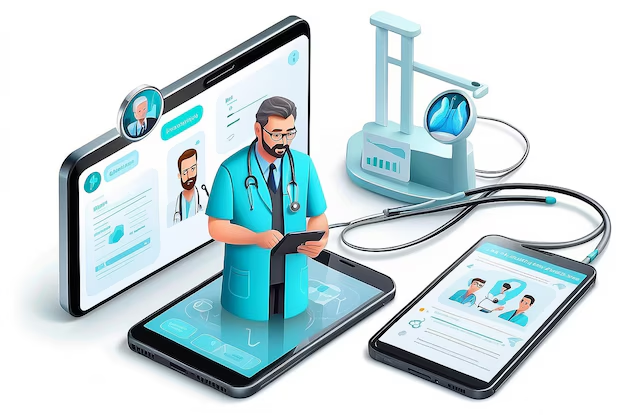
Telemedicine is making medical care more accessible than ever, especially for injured workers in remote locations. With virtual consultations, injured employees receive immediate attention without needing to visit a healthcare facility in person. This speeds up recovery times and minimizes disruptions in the workplace, ensuring that employees can return to work sooner while still receiving proper medical care.
One of the major benefits of telemedicine in workers’ compensation is the ability to provide quick and accurate medical assessments. Injured workers can consult with healthcare professionals via video calls, reducing wait times for medical evaluations and ensuring that treatment begins as soon as possible. This is particularly beneficial for minor injuries that do not require an in-person visit but still need professional medical advice.
Remote Assessments for Workplace Injuries
Remote assessment technologies are becoming an essential part of evaluating workplace injuries. Instead of waiting for in-person evaluations, workers can receive timely assessments through digital platforms. Video-based medical examinations and AI-driven diagnostic tools are allowing doctors to assess injuries with greater accuracy than ever before.
Although remote assessments cannot completely replace physical examinations in all cases, they serve as an effective preliminary step in workers’ compensation claims. Advanced imaging and AI-powered diagnostic software help doctors evaluate injuries remotely, ensuring that injured employees receive proper medical guidance even before an in-person visit occurs. As telemedicine continues to evolve, it will play an increasingly vital role in streamlining workers’ compensation claims and improving overall healthcare accessibility for injured workers.
Blockchain and Data Security in Workers’ Compensation
Blockchain technology is adding a new layer of security and transparency to workers’ compensation claims. By creating tamper-proof digital records, blockchain helps reduce fraud and disputes. Every claim, medical record, and transaction can be securely stored on a blockchain ledger, ensuring that data remains unaltered and verifiable.
One of the key benefits of blockchain in workers’ compensation is its ability to prevent fraud. Because blockchain records cannot be manipulated, fraudulent claims become easier to detect and eliminate. This creates a fairer system where legitimate claims are processed efficiently while dishonest claims are quickly flagged and dismissed.
Smart contracts, powered by blockchain, further enhance efficiency by automating key aspects of the claims process. These contracts execute predefined rules and conditions, ensuring that compensation is released only when specific criteria are met. By reducing the need for intermediaries and manual approvals, blockchain-driven smart contracts accelerate claims processing and improve overall accuracy.
Strengthening Data Privacy and Compliance
Protecting sensitive information is critical in workers’ compensation claims. Blockchain ensures compliance with data protection regulations by securing records against unauthorized access. Since all transactions on a blockchain ledger are encrypted and decentralized, personal information remains protected from cyber threats and unauthorized modifications.
Employers, insurers, and legal professionals handling workers’ compensation cases can use blockchain technology to streamline compliance with regulatory requirements. By maintaining a secure and transparent digital trail of all claim-related activities, blockchain reduces the risk of data breaches and unauthorized access, ultimately fostering a more trustworthy claims system.
Closing
When it comes to workers’ compensation, navigating the claims process requires expertise, dedication, and an understanding of the latest technological advancements. Solov & Teitell stands at the forefront of these innovations, ensuring that injured workers receive the compensation they deserve with minimal hassle. Our team is committed to using the most advanced tools available to streamline claims, enhance accuracy, and secure the best possible outcomes for our clients.
If you’re facing a workers’ compensation claim and want to ensure a smooth process with a team that puts your needs first, reach out to Solov & Teitell today. Our experts are ready to guide you through every step and provide the support you need.
Contact us now to get started.